


Sepele Mahogany
Swietenia macrophylla
Highly regarded by craftsmen as the finest of all furniture woods, mahogany gained popularity and a lasting place in woodcrafter’s hearts in the 18th century. Its origins are Central and South America and southern Mexico. Today Honduras mahogany is prized for its beautiful brown color, durability, natural sheen, and easy workability.

Figured Mahogany
Swietenia macrophylla
A version of Sepele Mahogany, this wood has a curly grain variation with gold highlights.

Cherry
Prunus serotina
North American black cherry primarily grows in the eastern half of the United States from Canada to Florida with the largest trees found in the Appalachian and Allegheny mountains of Pennsylvania and New York. Cherry is a hardwood with a fine, straight grain that ranges from reddish-brown to blond.

Black Walnut
Juglans nigra
The finest walnut trees are found in the Upper Mississippi River Valley. Here the trees are planted by Midwestern farmers, like any other crop. Black walnut is wanted for its hardness, uniform grain and ease in workmanship. It is known for its rich, dark brown color and attractive grain pattern.
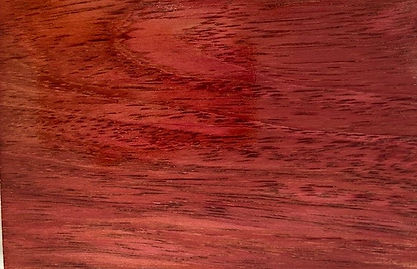
Purpleheart
Peltogyne
Prized for its distinctive and striking deep purple color, purpleheart is found primarily in the rain forests of Central and South America. This exotic hardwood changes color over time from purple to dark brown when exposed to bright light, so we recommend you do not place your purpleheart piece in direct sunlight. Working with purpleheart requires a light touch as burning can occur. This hardwood is designed by nature to withstand weather and pests.
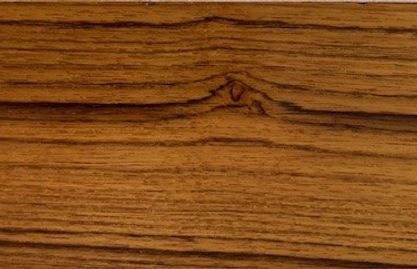
Teak
Tectonia grandis
Teak trees grow to over 100 feet tall with a circumference of 12 feet. Harvesters cut through the trees and let them dry out for several years. The trees are then felled, cut into manageable logs and floated downriver to the sawmill. This process is necessary because fresh cut logs are too heavy to float. Teak originated in Southeast Asia but is now grown in other tropical countries including Costa Rica and others in South America. It is an extremely dense, coarse-grained hardwood. Teak is highly durable, flexible and resistant to rot. These characteristics have made it a top choice among boat builders and furniture makers. Left unfinished it will weather to a gray color.

Bloodwood
Brosimum rubescens
Bloodwood is also known as “satine” and is imported from South America. Its denseness is ideal for a guitar fretboard and gun and knife handles. The dark, savory red tones can have variances ranging from orange to pale yellow.

Black Palm
Borassus flabellifer
Black Palm is technically a grass. It is neither a softwood nor a hardwood. Some refer to it as porcupine wood for its coloring of dark chocolate quill-like streaks blended into a tan background. It is found across south and southeast Asia, from Bangladesh to India and Vietnam, Black Palm is related to bamboo in that they are both of the monocot family or plants that sprout with a single leaf. Most hardwoods are dicots, or two-leaf seeds.

Canarywood
Centrolobium
Canarywood is commonly known as the tulip tree. It grows across South America from Panama to Southern Brazil. Its heartwood can range from pale yellow to pink, orange and dark reddish-brown. Canarywood is said to have good acoustic properties and is sometimes used for speaker enclosures and entertainment system cabinets.
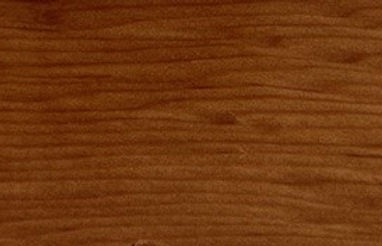
Douglas Fir
Pseudotsuga menziesli
Douglas fir is technically not a true fir but is its own genus. It was named after Scottish botanist David Douglas who first described the tree in the 1790’s. It is stiff and strong for its weight and is among the hardest and heaviest softwoods in North America.

Maple
Acer saccharinum
Known for the sweet syrup which comes from maple trees, the wood is also considered a “tonewood”, which is a type of wood that carries sound waves well. Violins, violas, double basses and cellos all have components that are usually made of maple wood. Its grain is fine and usually quite straight but can also feature beautiful wavy, curly or quilted grain patterns.

Chechen
Metopium brownie
While not a real Rosewood, chechen is sometimes called Caribbean rosewood. It has the identical two-toned grain pattern and can be polished to a high sheen displaying a shimmering iridescence. Found across the Caribbean and southeastern Mexico, the colors vary from red, golden, black, and pinkish brown.

Black Limba
Terminalia superba
Native to tropical western Africa, this hardwood features dark stripes. It became well known when the iconic guitar company Gibson, produced their now highly sought-after Flying V and Explorer guitars in 1958 with Black Limba which Gibson marketed as korina.